Militarisation means more than "just" spending on armed forces: this spending is the consequence of a security policy geared towards war. As a feminist peace organisation, we oppose the claim that more weapons lead to more security. We demand demilitarisation and disarmament because that is the only way to achieve genuine peace and comprehensive security.
More than 2,700 billion US Dollars. That is the global military expenditure in 2024. It marks the steepest rise in such spending since 1988. This stark figure underscores a world increasingly reliant on military solutions to achieve security. In sharp contrast: PeaceWomen Across the Globe firmly stands for non-violent conflict transformation. We believe that lasting security can only be achieved through inclusive dialogue and not through weapons or military deterrence.
From policy briefs and reports to contributions by activists in the Feminists Connecting for Peace network to the biographies of the 1000 PeaceWomen: our publications provide an insight into our political and project work and into the activities in our global network.
In our range of multimedia products you can listen to human rights and women's rights activists talk about their lives and work. You can also learn more about our and our partners’ projects and events.
Common paths to peace: this could be the title of this print newsletter. Because the women from Colombia and Ukraine featured in this issue are on these paths – even though war is still raging in Ukraine and a peace agreement has been in force in Colombia since 2016.
The Colombian Truth Commission has carried out exemplary work. Women, marginalised groups and the diaspora were actively involved in the process of truth-seeking and dealing with the history of the armed conflict. The commission’s mandate has ended, but the peace work continues.
In the webinar "Memory and Transformation", experts and participants addressed the legacy of conflict-related violence and injustice. In particular, the webinar explored which voices and experiences are excluded when dealing with this legacy, which still resonates today, and what the consequences of this exclusion are. The recording of the webinar is now available.
Moments of recognition and understanding emerged during the exchange between peace activists from Colombia and the Philippines. Our programme officers Andrea Filippi and Karin Widmer were there.
Despite the peace agreement, there can be little talk of peace in Nepal. The incomplete implementation of the agreement has intergenerational consequences for those affected by the conflict. At a Women's Peace Table, two generations shared their stories and presented their demands to the government. Our colleagues Camille Bernheim and Karin Widmer were there.
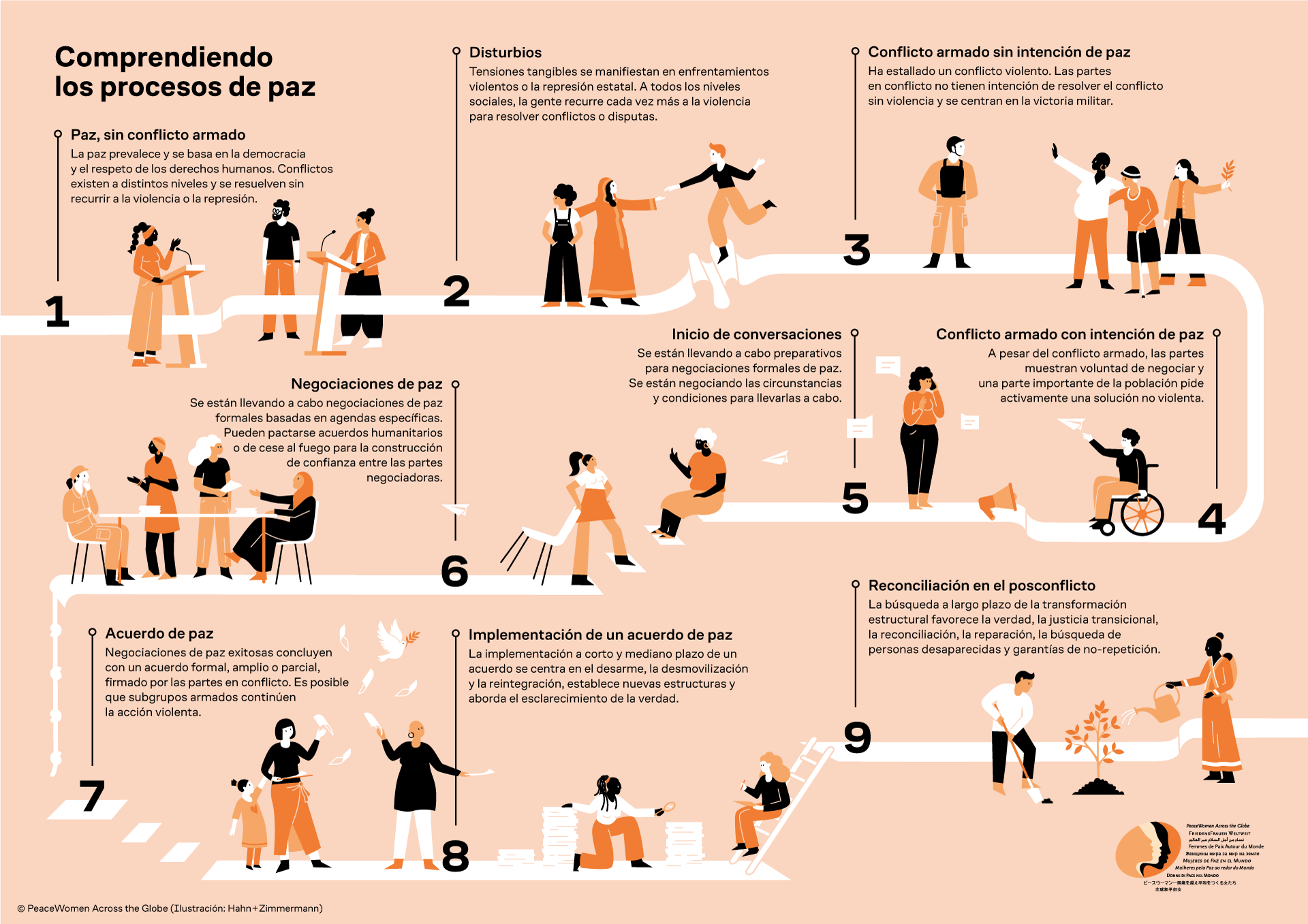
Colombia, Nepal and the Philippines. What these countries have in common: They have formally ended armed conflicts, but there is still no peace. Women peacebuilders from our partner organisations in these three countries share their achievements and insights on sustaining peace during transitional justice processes and preventing backsliding into armed conflict at an event in Bern on 16 October 2024.